Ourgrations
CHINA: Refugees Suffering From PTSD
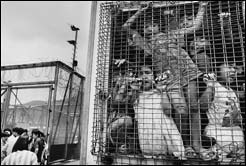 It is indisputable that refugee groups endure an extremely high level of stress. Although the actual traumatic event that pushes people to refugee status is stressing, the effects of the event can be just as detrimental. Specifically, one psychological effect that seems to be common amongst refugees is Post Traumatic Stress Disorder (PTSD). PTSD is a common disorder in any person exposed to major trauma, either physical or psychological (Post-Traumatic Stress Disorder, par. 5). PTSD, along with other psychological disorders, continues to plague refugees for an unknown period of time.
PTSD:
Symptoms
Nearly every victim of PTSD experiences fear and horror, shock, numb disbelief, confusion and helplessness, sorrow, stress, and extreme sadness after a traumatic event (Post-Traumatic Stress Disorder, par. 8). However, it does not necessarily occur from only a single event; it can occur after a single crisis or a series of events as long as the severity is enough (Post-Traumatic Stress Disorder, par. 6). PTSD has three characteristics (Post-Traumatic Stress Disorder, par. 9):
1.) Hyperarousal
2.) Avoidance
3.) Reexperience
Most of the time, Hyperarousal occurs first. Hyperarousal can be described as an ongoing state of tension with many similarities to the natural “fight or flight” response (Post-Traumatic Stress Disorder, par. 10). Symptoms associated with Avoidance parallel those associated with Hyperarousal with the inclusion of detachment and numbness (Post-Traumatic Stress Disorder, par. 11). Lastly, Reexperience includes unwelcome and disruptive thoughts about the event. These thoughts tend to interfere with normal function and general concentration. Reexperience is considered to be the worst symptom of PTSD (Post-Traumatic Stress Disorder, par. 12).
Science Behind Traumatic Stress
But, it is not these simple symptoms that make PTSD out to be as serious as it is. It's the fact the PTSD disorder can mean anything from a nightmarish few months to a lifetime of misery (Butler, par. 9). The most recent research suggests that the trauma of PTSD can alter brain chemistry for decades, and may kill brain cells that are critical to memory (Butler, par. 7).
From what we have learned thus far, PTSD results in a shrinkage of the refugee’s brain. Recent studies have shown atrophy in the hippocampus post-traumatic while the rest of the brain is fine. Research has shown that up to 25% of the hippocampus is lost due to emotional trauma. To put this finding into perspective, 25% loss is like saying that the heart loses one of its four chambers due to stress. Since the hippocampus is used to form long-term memories, retrieve old ones, and manage explicit, conscious memory it makes sense to think that PTSD would contribute to a loss of this structure (Sapolsky, par. 8).
Although these findings are merely published research and nothing is considered to be fact yet, these are definite possibilities to help us understand this complex disorder. If shrinkage of the brain, loss of memory, and inability to manage the explicit consciousness are indeed at stake, it is easy to see why PTSD is a serious repercussion for refugees.
REFUGEES AND PTSD:
Now that we have a quick background on PTSD, how does it affect refugees? There are two groups of refugees that will be discussed: Chinese immigrants in the United States, and Vietnamese refugees in China.
Assimilation in the United States
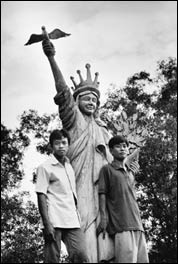 Chinese immigrants in the United States need to overcome physical, social, and emotional barriers in order to assimilate into American culture. Chinese refugees cope with language barriers, adjusting to a new culture, changing roles in the family, and learning how to establish themselves in an anti-immigrant environment (Morrissey, par. 2). On top of that, the difficulty of acculturation differs for each immigrated refugee and depends on many different factors including age, gender, language proficiency, available support systems in the United States and one’s homeland, the refugee’s expectations before arriving, the reason for immigration, cultural similarities, and education (Morrissey, par. 3).
Many of the immigrants who come to the United States are refugees who have been forced to leave their country due to dangerous situations, and political upheavals. Unlike regular immigrants, refugees are in need of cross-cultural counseling and many endure PTSD (Morrissey, par. 3). Another factor to take into consideration is the fact that many of these immigrating refugees may have even spent time in refugee camps during the transition. This opens the possibility of enduring trauma there as well. Trauma in refugee camps may be the result of rape, forced prostitution, hunger, extreme poverty and violence that is either observed or experienced by the refugee. Some of these refugees may have even witnessed their parents tortured or killed. All of these contributing factors may manifest in PTSD, leading to depression (Morrissey, par. 4).
Refugees in China
Not only are there refugees from China in the United States, but refugees from other countries in China. For example, chronic food shortages, political repression, and poverty have driven tens of thousands of people into China from North Korea. As might be expected, North Korean refugees suffer severe psychological stress that attributes to post-traumatic stress disorder. This distress is caused by their vulnerability in China, and the result of North Korean famine and abuses suffered at the hands of the North Korean political regime. These abuses include perceptions of unfairness with respect to the distribution of food aid, death of family members during the famine, and incarceration in the North Korean gulag (where the respondents reported witnessing forced starvation), deaths due to torture, and even infanticide and forced abortions. Proving the effects and symptoms of PTSD, the ability of the refugees to hold jobs in China and accumulate resources for on-going migration have decreased for them. (Chang, Haggard, and Noland, par. 1)
A majority of the refugees in China are those that have been affected by the Vietnam War. After the war there was a mass departure of Vietnamese people from Vietnam. Surprisingly, there was also a substantial number of Chinese people who migrated from Vietnam during the war. Specifically, the chinese in Vietnam felt that the government’s policies directly targeted them so mass migration from Vietnam was in order (Boat People, par. 4.).
With the large numbers of immigrants flowing from Vietnam into China, it was expedient for the government to set up various refugee camps. One such camp was located in Hong Kong. Chinese and Vietnamese alike were herded into these camps were slim to none of the relief money sent to the refugees was actually given to the them. (Boat People, par. 9)
INNOVATIVE INTERVENTION
With the many numbers of Chinese refugees and immigrants coming into the states, counseling agencies and individual counselors alike have researched and developed different methods to help those refugees suffering from PTSD.
Problems with finding Help from Professionals
With the rising number of refugees it has been more and more important for health professionals to make themselves more apparent and willing to help. However, there are a few problems associated with getting help in the first place (Morrissey, par. 23).
First, most refugees are unfamiliar with the role of counselors due to the scarcity of mental health professionals in low-income countries. Since these refugees are unfamiliar with the role of counselors, they don't see a need to see a counselor (Morrissey, par. 23).
Second, some people tend to keep any problems they are having within the family. This statement is especially pertinent to the Asian population, and the Chinese immigrants are no exception. This is where becoming more familiar with refugee cultures and how to deal with unresponsive refugees becomes critical. It has been said that when refugees see that we don’t know everything about their culture, they become more willing to respond and more open to take counseling services that are offered them (Morrissey, par. 24).
Third, different cultures have different belief systems about healing whether it is emotional, physical, or spiritual in nature. Particularly, Chinese refugees are unfamiliar with sitting down to talk about their problems with someone they do not know and trust. According to Bemak, a counselor who works with different immigrant populations, “many refugees are simply reluctant to share their feelings and they have ingrained feelings of distrust,” (Morrissey, par. 26). Since many refugees share this feeling of distrust, the counselors must really strive to earn that trust.
As might be expected, these three problems are becoming increasingly dealt with as time goes on and the need for change increases. The effects of migration and disaster are brutal on both the body and the mind thus the need for these refugees to open up and talk about their problems is very critical. Stress in itself, if left to grow and eminate in the body, will take hold of a person and lead to many different problems, including disease. The earlier counseling is used to heal these refugees, the better.
Multi-Level Model (MLM)
With the increasing number of worldwide refugees and migration, the skills to counsel and deal with these people have varied. Obviously, this would make it difficult to come up with a generalized guideline for counselors to follow in order to effectively deal with these refugees. To solve this problem, the Multi-Level Model (MLM) has been developed. The model itself consists of four phases that are meant to be used simultaneously rather than sequentially (Morrissey, par. 27):
Phase 1: Mental Education. According to the MLM, this first phase consists of teaching the refugee about what counseling really is, why it is important, and what the refugee should hope to expect from each session (Morrissey, par. 28). As mentioned above, one of the major problems with getting help from counselors is the fact that many refugees do not know what counseling is and what to expect. A general introduction to the counseling service by letting the refugee know how important counseling services are and what counseling is will help the refugees to overcome any hindrances to finding help.
Phase 2: Western Individual Group and Family Counseling. This second phase consists of using the counselor’s unorthodox practices to help counsel the refugee. The MLM reminds counselors to remain culturally-sensitive while using their Western influenced ideas methods (Morrissey, par. 29).
Phase 3: Cultural Empowerment. The third phase of MLM is where the counselor acts as a role-model for the refugee as he is trying to find his way in the new culturally different environment. Refugees have a limited understanding of their new area and so the counselor is advised to go above and beyond the traditional role as a counselor, to act as a source and guide for the refugees to use while trying to master their new environment (Morrissey, par. 30).
Phase 4: Indigenous Healing. Lastly, it is imperative to integrate multicultural counseling techniques. Specifically, the MLM recommends that counselors need to work with traditional healers from the refugee’s culture of origin (Morrissey, par. 31).
Conclusion
Post Traumatic Stress Disorder is one of the most detrimental effects of migration and stress in general on refugees. However, through innovative intervention we can help not only the two groups of refugees discussed above, but any refugee in general. It is uplifting to hear that there are counselors around the country that care so much about these people to alter their methods and help each other to treat these refugees more efficiently. I think that it is ingenious for counselors to come together to form a standard for counseling. The effects of Post Traumatic Stress Disorder on the human body are not only physical, but mental as well. With this knowledge, we must do all that we can to see that refugees are taken care of and shown love and respect as we all have been shown throughout our lives.
Works CiteD
“Boat People.” Wikipedia. 1 April 2008. Wikipedia Foundation, Inc. 8 April 2008 <http://en.wikipedia.org/wiki/Boat_People>
Butler, Katy. “Researching PTSD: The Biology of Fear.” SIRS Knowledge Source. July/Aug. 1996. Family Therapy Networker. 7 April 2008 <Link >
Chang, Haggard, and Noland. “Migration Experiences of North Korean Refugees: Survey Evidence from China.” Social Science Research Network. March 2008. Social Science Electronic Publishing. 8 April 2008 <http://papers.ssrn.com/sol3/papers.cfm?abstract_id=1106323>
Morrissey, Mary. “Rising Number of Immigrants Means New Challenges for Counselors: Cultural Sensitivity Needed to Help Them Adjust.” SIRS Knowledge Source. Oct. 1995. Counseling Today. 7 April 2008 <Link >
“Post-Traumatic Stress Disorder.” SIRS Knowledge Source. Oct. 2002. Harvard Men’s Health Watch. 7 April 2008 <Link >
Sapolsky, Robert. “Stress and your Shrinking Brain.” SIRS Knowledge Source. March 1999. Discover. 7 April 2008 <Link >
http://owl.english.purdue.edu/owl/resource/557/01/.]